
Last Updated: July 2026
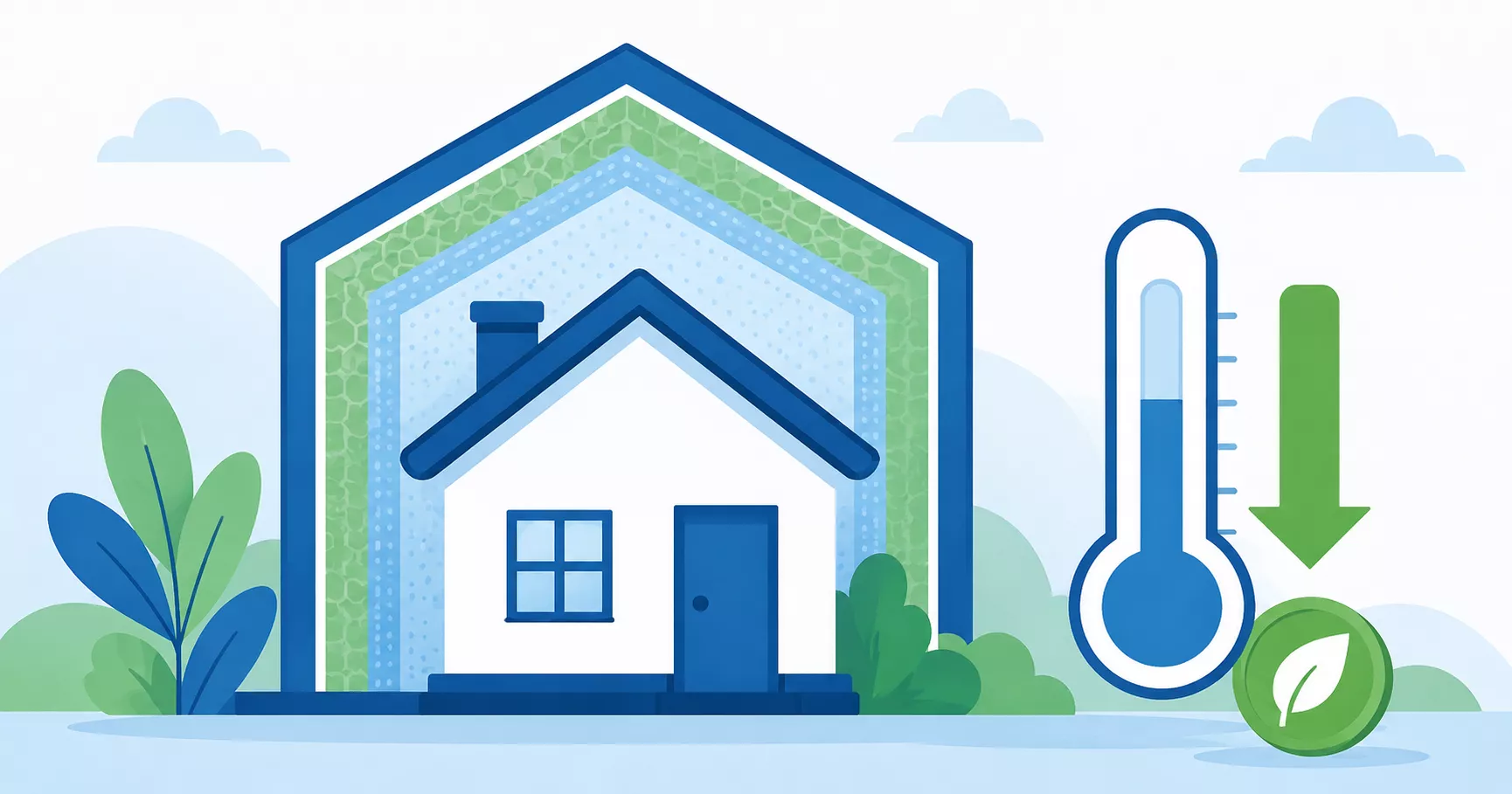
While LIHEAP helps pay your energy bill, this program actually fixes the reason your bill is high in the first place — drafty windows, poor insulation, an aging furnace. According to the Department of Energy, households receiving WAP services save an average of $372 or more every year, with the work costing eligible households nothing. Here’s how the largest residential energy efficiency program in the country actually works.
What WAP Actually Is
The Weatherization Assistance Program (WAP), run by the U.S. Department of Energy, has been improving the energy efficiency of low-income homes since 1976 — helping more than 7.2 million families over its history, and currently weatherizing roughly 32,000 homes every year, supporting 8,500 jobs nationwide in the process. Unlike LIHEAP, which pays down your existing bill, WAP addresses the underlying inefficiency causing that bill to be high — a genuinely complementary relationship worth understanding.
Who Qualifies?
The federal DOE standard sets eligibility at household income at or below 200% of the Federal Poverty Guidelines, though states can choose an alternate standard — many instead use HHS’s LIHEAP eligibility criteria of 60% of State Median Income (SMI), which can be more or less generous depending on your specific state and household size.
Automatic eligibility (no separate income verification needed):
- Any household with a member receiving SSI (Supplemental Security Income)
- Many states also automatically qualify households receiving TANF or already approved for LIHEAP/HEAP
Priority is given to:
- Elderly households (60+ in many states)
- Households with a member who has a disability
- Families with children (often under 6, though this varies)
- High-energy users or households with a high “energy burden” (energy costs eating up a large share of income)
- Native American households
Both homeowners and renters can apply — this surprises many people who assume weatherization programs only help homeowners.
Example: How Income Limits Vary Dramatically by State
Since states can choose their own income standards, the differences are substantial. Washington, D.C.’s FY26 guidelines (using a higher SMI-based standard) allow:
| Household Size | D.C. Income Limit (FY26) |
|---|---|
| 1 | $61,841 |
| 2 | $80,869 |
| 4 | $118,926 |
| 6 | $156,982 |
Compare this to a state using the standard 200% FPL threshold, where a single person’s limit would be roughly $31,920 — nearly half of D.C.’s figure. This is exactly why checking your specific state’s current guidelines matters far more than any national average.
What Actually Gets Fixed
Following a professional home energy audit, common weatherization measures include:
- Insulation — attic, walls, and floors
- Air sealing — reducing drafts and outside air infiltration
- Duct sealing and repair
- Heating and cooling system repair or replacement
- Roof repair (when tied to energy efficiency, such as fixing a leak causing insulation damage)
- Mold remediation
- ENERGY STAR lighting and appliance installation
- Water conservation measures
Important limitation: WAP funds are strictly tied to energy efficiency and health/safety — it does not cover purely cosmetic repairs or upgrades unrelated to energy performance, no matter how much your home might need them.
How the Process Actually Works: Step by Step
Step 1 — Determine your eligibility and find your state/local WAP provider through the official DOE state map tool.
Step 2 — Submit an application with your income documentation. In many states, applying for LIHEAP also covers your WAP application — worth asking about, since it saves you from duplicate paperwork. See our complete LIHEAP guide for that process.
Step 3 — Get placed on a waitlist if you’re determined income-eligible. Wait times vary significantly by area and funding availability — anywhere from a few weeks to several months.
Step 4 — A professional energy audit is scheduled. This includes a review of your energy bills, a blower-door test (measuring how much outside air infiltrates your home), and a full inspection of your living areas, attic, basement, and all energy equipment.
Step 5 — Renters need landlord permission. Your local WAP provider will work directly with you and your landlord to secure written approval before any work begins. Landlords cannot be required to participate — if yours refuses, you unfortunately can’t receive services at that specific address, though your local agency will typically attempt to obtain permission on your behalf.
Step 6 — Work is completed by licensed, WAP-approved contractors — the program itself is not a contracting company and doesn’t bid on private jobs, so all work goes through vetted local providers.
Step 7 — A final inspection confirms the work meets Standard Work Specifications and that all equipment is operating safely before the case is closed.
WAP vs. LIHEAP: How They Actually Compare
| WAP | LIHEAP | |
|---|---|---|
| What it does | Physically improves home energy efficiency | Pays existing utility bills |
| One-time or recurring? | Generally one-time per home | Can reapply annually |
| Cost to you | $0 — full weatherization at no cost | $0 — bill credit |
| Application | Often combined with LIHEAP application in many states | Standalone or combined |
Many households qualify for both, and applying for LIHEAP can automatically make you eligible for WAP in several states. If you need immediate help with a current bill while waiting for weatherization services (which can take months), apply for LIHEAP at the same time rather than waiting.
If You’re Denied
Ask your local agency specifically why you were denied and whether you can appeal or reapply if your circumstances change (e.g., a drop in income, a new disability, or an added household member). Many state programs, including Massachusetts, explicitly guarantee applicants the right to appeal through their local energy assistance agency.
Preparing Your Home for the Visit
Before your scheduled weatherization appointment:
- Secure any pets
- Clear clutter from main walkways and work areas
- Make sure your attic and basement are accessible to the crew
Major Scam Warning
WAP is entirely free for eligible households — the program cannot accept payment for weatherization work or any related service. If anyone claiming to represent WAP asks for payment, a fee, or your Social Security number before verifying eligibility, treat it as a scam and contact your state’s official WAP agency directly to report it.
Other Programs Worth Checking If You Don’t Qualify or Are Waiting
- LIHEAP — for immediate help with current utility bills
- USDA Single Family Housing Repair Loans & Grants — for very low-income rural homeowners, including grants specifically for elderly homeowners to remove health or safety hazards
- HUD HOME program — funds home repair grants and loans in some areas
- State-specific weatherization or energy efficiency rebate programs — many states run additional programs beyond the federal WAP baseline
Frequently Asked Questions
How much does WAP cost if I qualify? Nothing. Weatherization services are 100% free for eligible households — the program is legally prohibited from accepting payment for the work performed.
Can renters really apply, or is this only for homeowners? Both can apply. Renters need their landlord’s written permission before work begins, and your local WAP provider will help coordinate it.
How long does the whole process take? Highly variable — a few weeks to several months on the waitlist depending on local funding and demand, with the actual weatherization work typically taking one to two days once scheduled, longer for larger or more complex homes.
Does receiving SSI automatically qualify me? Yes, in every state — any household with a member receiving SSI is automatically income-eligible for WAP, without needing separate income verification.
Is WAP the same as LIHEAP? No, though they’re often confused since both are energy-focused. WAP physically improves your home’s energy efficiency (insulation, sealing, equipment repair); LIHEAP pays down your existing utility bill. Many households qualify for and benefit from both.
What if my landlord won’t give permission for weatherization work? Unfortunately, landlords cannot be required to participate, so you may not receive services at that specific rental address if they refuse — though your local agency will typically attempt to secure permission first.
Are there really no fees at all? Correct — legitimate WAP services never charge eligible households a fee. Any request for payment is a scam.
Final Thoughts
WAP addresses a problem LIHEAP can only patch over temporarily — the actual energy inefficiency driving your bills up in the first place — and it’s genuinely free for both homeowners and renters who qualify, with SSI recipients automatically eligible in every state. Since many states let you apply for LIHEAP and WAP together, and being on one program’s waitlist doesn’t prevent you from getting immediate bill help through the other, applying to both simultaneously is almost always the smarter move if you’re eligible for either.
This article is for informational purposes only and is not affiliated with the U.S. Department of Energy or any state weatherization agency. Income limits, priority criteria, and program details vary significantly by state and change periodically — always verify current guidelines directly through your state’s WAP provider or at energy.gov/scep/wap.

Hotspot Research Team covers free and low-cost internet assistance programs across the United States, including Lifeline, government-supported hotspot devices, and related benefits like SNAP, Medicaid, and SSI. The team focuses on researching official government sources and verified provider information to deliver clear, accurate, and up-to-date guidance for low-income households, students, and remote workers seeking affordable connectivity. Every article is reviewed and updated regularly to reflect current eligibility rules and program changes.